



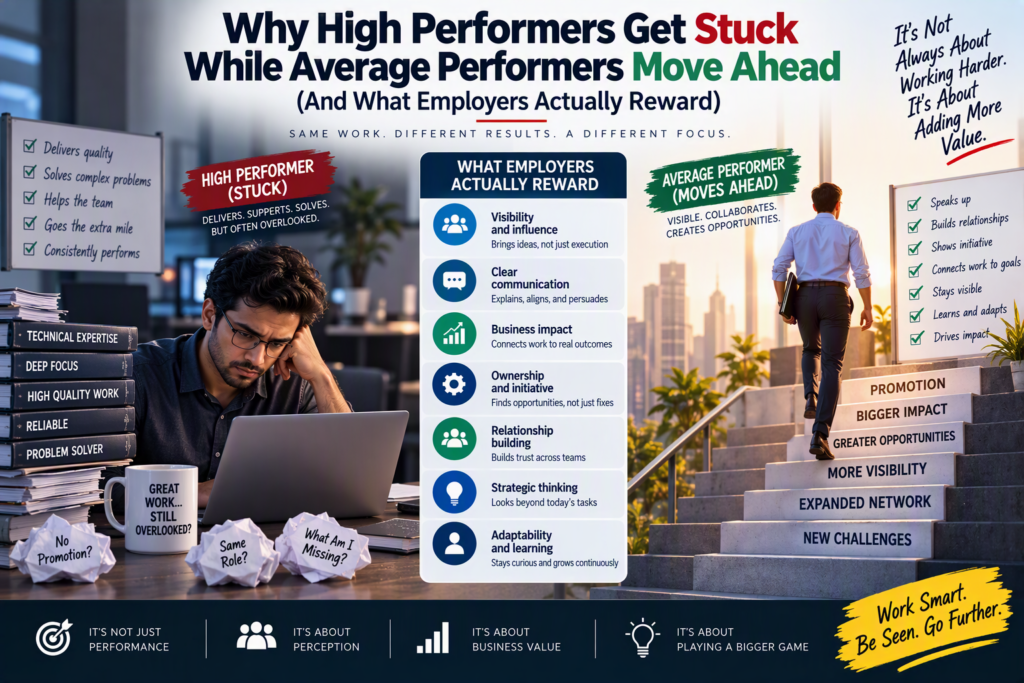
Why high performers get stuck while less capable colleagues move ahead is one of the most common frustrations in modern workplaces. You finish the hardest tasks first, you’re the one people quietly rely on, and yet the promotion, the pay rise, or the new title keeps landing on someone else’s desk. It isn’t bad luck. Once you understand what employers actually reward, the pattern makes complete sense and it’s fixable.
Why High Performers Get Stuck in the First Place
Being stuck doesn’t mean your work is weak. It usually means the opposite your output is strong enough that your manager doesn’t want to move you out of your current seat. Meanwhile, decision-makers reward what they can see and measure, not just what gets done quietly and well. That gap between doing great work and being seen doing great work is where careers stall.
What Employers Actually Reward (It Isn’t Hours Worked)
A widely referenced workplace study found that employees who actively communicate their results and build internal networks are promoted significantly more often, even after controlling for actual performance effort alone was never enough on its own. In practice, employers consistently reward four things: visible results, work that affects more than one person or team, ownership of outcomes rather than tasks, and the ability to translate work into numbers a manager can repeat in a meeting.
Visibility Beats Volume
If the people above your manager don’t know what you built, it barely counts toward your case for promotion. A report only your immediate team sees is useful. The same report presented in a leadership meeting becomes evidence.
Leverage Beats Effort
A spreadsheet that saves you two hours a week is nice. A dashboard or template that saves fifty people two hours a week is leverage and leverage is what gets remembered at review time.
Evidence Beats Reputation
“Reliable” and “hardworking” are reputations. “Cut monthly reporting time by 40% and reduced errors to zero” is evidence. Employers can act on evidence in a promotion conversation; they can’t act on a vague reputation.
Why Average Performers Move Ahead Faster
- They narrate their work. They send updates and summaries so leadership doesn’t have to go looking for impact.
- They package results, not effort. They lead with numbers and outcomes instead of describing how hard they worked.
- They build relationships early. They have a sponsor in the room advocating for them before a promotion is even discussed.
- They ask directly. They request stretch projects and promotions instead of waiting to be noticed.
Recent workplace research backs this up directly: a 2025 workplace survey found that most employees believe visibility is rewarded more than actual results, with nearly half saying managers notice speed and responsiveness ahead of substance. Whether or not that’s fair, it explains a lot of why high performers get stuck while more vocal, average colleagues get picked first.
The Excel Skills Gap That Quietly Holds High Performers Back
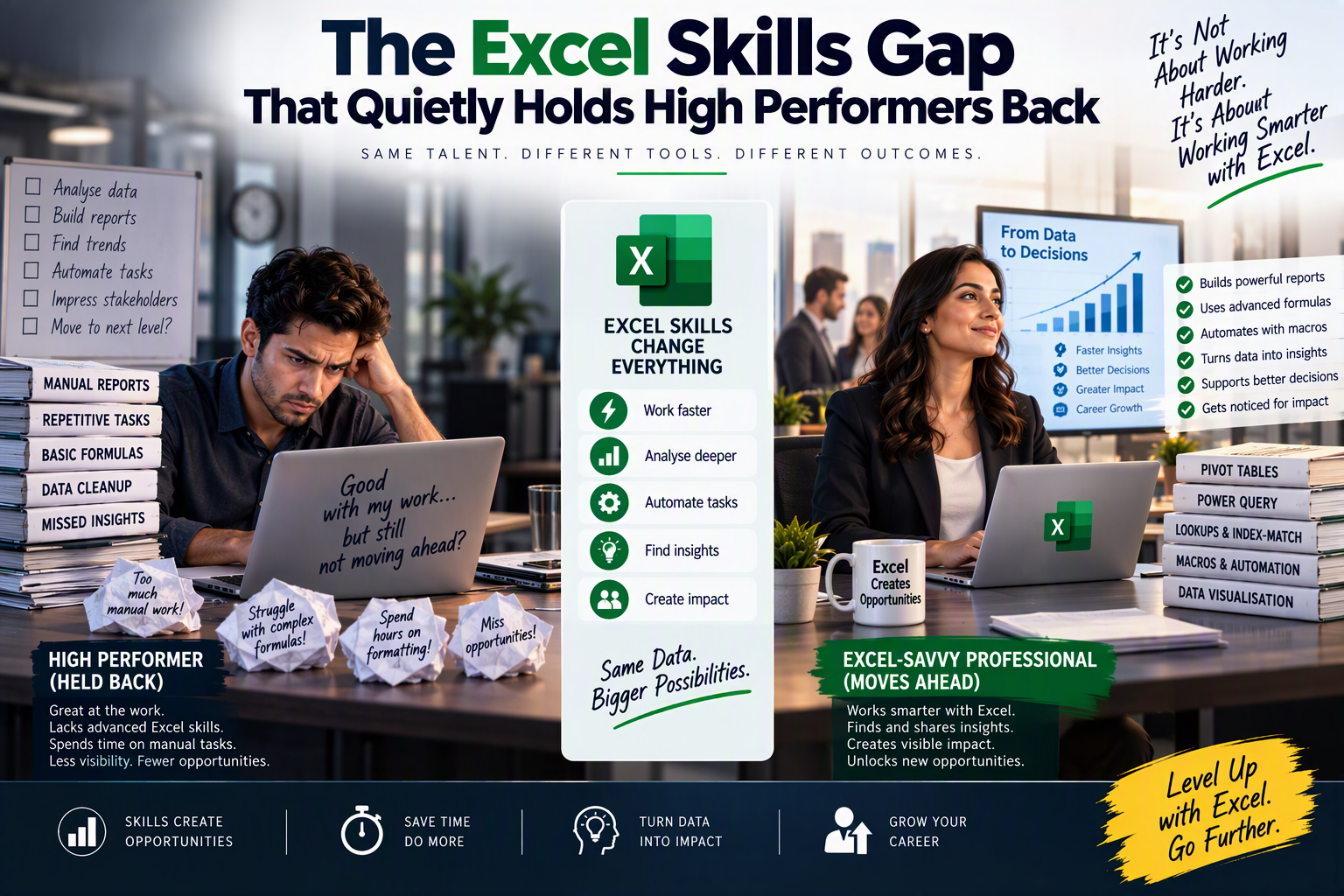
One of the fastest, most practical ways to close the visibility gap is to get better at turning raw work into something a manager can see, understand, and repeat upstream and that’s exactly what strong Excel skills do. Pivot tables, dashboards, and automated reports convert hours of quiet effort into a single chart a director can glance at in a meeting. That’s precisely the kind of “leverage” that gets remembered at review time, which is why professionals in Melbourne, Sydney, Brisbane, and Perth are increasingly picking up structured Excel training to make their existing work more visible, not just to do more of it.
One analysis of workplace promotion patterns put it bluntly: if you build a great Excel dashboard that only your team uses, your impact stays limited — but the same dashboard used in leadership meetings suddenly becomes visible value. Skills like pivot tables, dashboards, and automated reporting are exactly what turns quiet, competent work into something decision-makers can point to.
How to Get Unstuck: What to Do Differently
- Report outcomes, not activity. Replace “I worked on the Q3 report” with “I cut Q3 reporting time by 40%.”
- Build something reusable. Turn a one-off spreadsheet into a template or dashboard other teams can use.
- Get in front of leadership. Ask to present results yourself instead of letting your manager summarise them secondhand.
- Upskill visibly. A recognised Excel or data credential gives your manager a concrete reason to nominate you for bigger projects.
- Ask for the next step. State plainly that you want the promotion or project don’t wait to be offered it.
Frequently Asked Questions
Why do high performers get stuck while average performers get promoted?
Because promotion decisions are based on what’s visible and measurable, not just on how much work gets done. Average performers who communicate results clearly are often seen as more “promotion-ready” than quiet high performers.
What do employers actually reward at review time?
Visible results, work that benefits more than one team, clear ownership of outcomes, and evidence numbers and reports rather than a general reputation for working hard.
Can Excel skills really help a stalled career?
Yes. Dashboards, pivot tables, and automated reports turn everyday work into something leadership can see and repeat in a meeting, which is exactly the kind of visible evidence that supports a promotion case.
Final Thoughts
If you’re wondering why high performers get stuck while average performers move ahead, the honest answer is that employers reward visible, measurable impact not hours logged. The fastest fix isn’t working harder; it’s making your results impossible to miss. A practical Excel course is one of the most direct ways to do that, whether you’re based in Melbourne, Sydney, Brisbane, Perth, or anywhere else in Australia.