
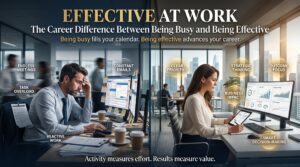


Being effective at work is not the same as being busy, and sooner or later your career shows you the difference. Busy people fill their calendars, answer every message within minutes and stay back on Thursday nights. Effective people finish the right things, in less time, and leave behind work that others can rely on. Both are tired by Friday. Only one of them tends to get the promotion.
If you have ever wondered why a colleague who seems to work fewer hours keeps getting the interesting projects, this article is for you. We will look at what it really means to be effective at work, where busy work hides (spreadsheets are a classic hiding place), and which habits and Excel skills help Australian professionals turn effort into results.
What Does Being Effective at Work Actually Mean?
Being effective at work means producing outcomes that matter to your team or your employer, using the least wasted effort possible. Activity is what you do. Effectiveness is what changes because you did it.
A simple test helps. At the end of the week, ask yourself: what is different because I was here? If the honest answer is “I cleared my inbox and attended eleven meetings”, you were busy. If the answer is “I fixed the reporting error, automated the monthly rollup and gave the manager a clear recommendation”, you were effective.
People who are effective at work tend to share three traits:
- They know what a good result looks like before they start.
- They build tools, templates and processes so the same task never needs doing from scratch twice.
- They explain their results in plain language, so decision makers can see the value without digging for it.
Why Busy People Stall While Effective People Move Up
Managers rarely promote the person who works the longest hours. They promote the person they trust with bigger problems. Busy people often look reliable, but they can be hard to move forward, because the organisation depends on their constant effort just to keep things running.
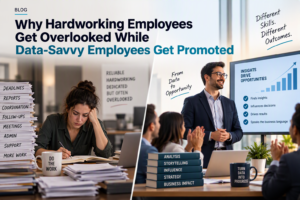
We have written about related patterns before, including why hardworking employees get overlooked and why high performers get stuck while average performers move ahead. The common thread is simple: effort is easy to see, but impact is what gets rewarded.
| Area | Busy professional | Effective professional |
| Daily focus | Reacts to whatever arrives next | Works from a short list of priorities |
| Repeated tasks | Redoes them manually each time | Automates or templates them once |
| Reporting | Sends long reports full of activity | Sends short updates with a clear recommendation |
| Accuracy | Hopes the numbers are right | Builds checks and tests before sharing |
| Workload | Takes on everything and burns out | Negotiates scope and timing honestly |
| Career result | Reliable, but stuck in place | Trusted with larger, more visible work |
The Copy-and-Paste Trap: Where Busy Work Hides in Spreadsheets
Spreadsheets are where a lot of busy work lives. Picture an office administrator or finance officer in Sydney who spends two days every month copying data from three exports into one workbook, fixing the formatting by hand, and re-typing totals into a summary. It feels productive. They are working hard the entire time. But none of that effort builds anything lasting.
Now imagine the same person using Power Query to import and clean the exports automatically, a pivot table to summarise the data in seconds, and a short macro to refresh the report with one click. The monthly task shrinks from two days to an hour. That freed time can go into analysis, which is the kind of work that makes someone effective at work and noticeable to leadership. We explore this idea further in The Copy-and-Paste Economy.
Automation is not about replacing yourself. It is about moving yourself up from operating the process to improving it.
Seven Habits That Make You Effective at Work
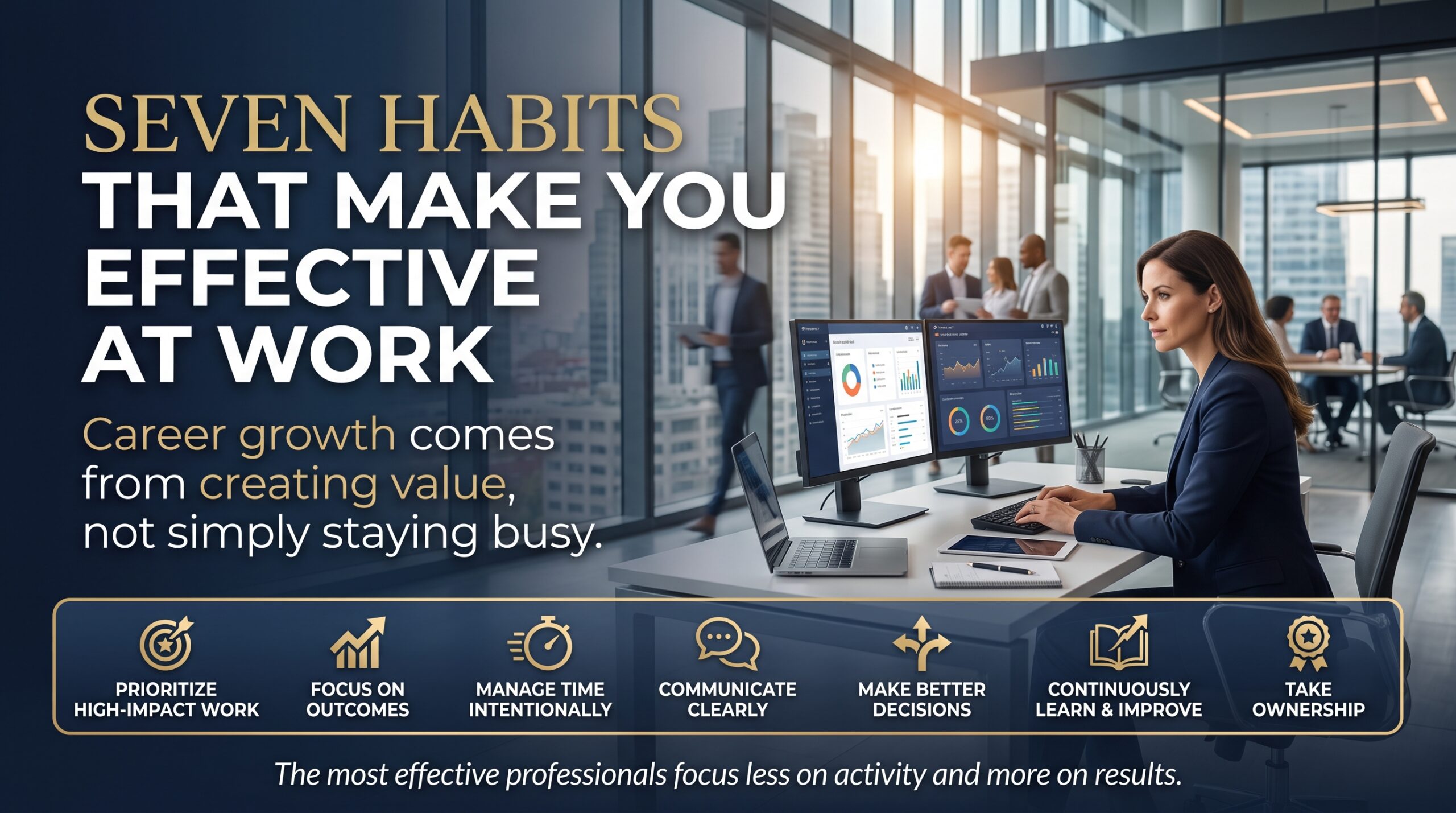
1. Define the outcome before you start
Spend two minutes writing down what “done” looks like. A clear outcome stops you from polishing the wrong thing and gives you something to measure.
2. Protect a block of focused time
Constant switching between messages and tasks is the engine of busyness. Block out 60 to 90 minutes for your most important work and treat it like a meeting you cannot skip.
3. Automate anything you do more than three times
If a task repeats, it deserves a better system. Templates, Excel tables, formulas, Power Query and simple macros are all ways to stop doing the same thing the long way. Our Excel VBA and Macros Masterclass is built around exactly this idea.
4. Check your numbers before others do
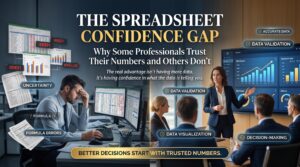
Nothing damages credibility faster than a wrong figure in a leadership meeting. Build simple reconciliation checks into your workbooks. We cover why this matters in The Spreadsheet Confidence Gap.
5. Report results, not activity
“I updated the forecast” is activity. “The updated forecast shows we will miss the quarterly target by about 4%, and here are two options to close the gap” is a result. Managers remember the second kind of update.
6. Learn to say “not yet” or “not that way”
Effective people protect their capacity. They ask what the priority is, agree on a realistic deadline and push back politely when a request would crowd out something more valuable.
7. Review your week, not just your to-do list
Take ten minutes every Friday to note what moved forward, what wasted time and what you could automate next week. Small adjustments compound quickly.
How Excel Skills Help You Be Effective at Work
You can build effectiveness without any software at all, but Excel is one of the fastest places to feel the difference. It sits behind reporting, budgeting, planning and analysis in almost every Australian workplace. The right skills turn hours of manual effort into minutes. Here are practical starting points based on where you are:
- Microsoft Excel Beginner for solid foundations in formulas, formatting and tables.
- Microsoft Excel Intermediate for lookups, functions, charts and cleaner data organisation.
- Microsoft Excel Advanced for pivot tables, dashboards, data analysis and automation.
- Excel VBA & Macros Masterclass for automating repeat tasks.
- Excel for Accountants and Excel for Small Business for finance and owner-operator workflows.
- Excel for Project Managers, Excel for HR Professionals and Excel for Supply Chain Inventory for role-specific reporting.
- MOS Exam Preparation Course if you want a recognised credential to back up your skills.
You can compare all options on our Excel courses page. If you are unsure where to begin, talk to a course advisor and describe the tasks that eat most of your week.
Being Effective at Work Across Australian Cities
The pressure to look busy is the same in every office, but the type of work differs by city. These local pages show training options near you, including live online classes.
- Sydney: finance, banking and professional services teams juggle heavy reporting cycles. See Excel courses in Sydney.
- Melbourne: healthcare, education, retail and government roles rely on accurate, repeatable reports. See Excel courses in Melbourne.
- Brisbane: construction, logistics and resources businesses need clean operational data. See Excel courses in Brisbane.
- Perth: mining and energy teams manage large production and cost spreadsheets. See Excel courses in Perth.
- Adelaide: health, manufacturing and defence-related teams value tidy, auditable workbooks. See Excel training in Adelaide.
- Canberra: government and policy teams turn data into briefings under tight timelines. See Excel courses in Canberra.
Wherever you work, the learning model is flexible: attend live online, or join classroom sessions where they run in major cities.
How to Show You Are Effective at Work in Reviews and Interviews
Performance reviews and interviews reward evidence. Replace vague lines like “hardworking team player” with specific results: “automated the weekly sales report, saving the team about three hours each week” or “found a formula error that would have overstated the budget”. If you can attach a number, even an approximate one, do it.
It also helps to keep a simple “wins” document. Every time you remove a manual step, catch an error or help someone decide faster, add one line. When review season arrives, you will have a record of how effective you have been rather than a vague memory of how busy you felt. The Jobs and Skills Australia site is also a useful place to see which skills are in demand across occupations.
Our article on the invisible skill that decides who gets promoted goes deeper on how to communicate this value.
Common Mistakes That Keep People Busy Instead of Effective
- Saying yes to everything. Every yes is a no to something more important.
- Rebuilding the same file every month. If you are copying last month’s workbook and editing it by hand, a template or automation will pay for itself quickly.
- Measuring hours instead of outcomes. Time spent is not the same as value created.
- Skipping the learning. Ten hours of training can remove hundreds of hours of manual work over a year.
- Hiding the work. If nobody understands what you achieved, it will not count at promotion time.
Frequently Asked Questions About Being Effective at Work
What is the difference between being busy and being effective at work?
Being busy means filling your time with tasks. Being effective means achieving meaningful results with well-chosen effort. A busy person measures hours. An effective person measures outcomes.
How can I be more effective at work without working longer hours?
Clarify your priorities, protect focused time, automate repeat tasks and communicate results clearly. Improving your Excel skills is a practical way to save hours every week.
Do Excel skills really make you more effective at work?
In many roles, yes. Excel supports reporting, planning and analysis in most Australian workplaces. Skills like pivot tables, Power Query and macros reduce manual effort and lower the risk of errors.
Which Excel course should I start with?
Beginners usually start with Excel Beginner, while confident users often move to Intermediate or Advanced. If you are not sure, an advisor can help match a course to your daily tasks.
Start Building Skills That Make You Effective at Work
Busy is a feeling. Effective is a record of results. The good news is that anyone can move from one to the other with the right habits and the right tools, and Excel is a very practical place to begin.
Explore our Excel courses, call 1300 649 299, or contact our team to find the right pathway for your role.